Rajasthan’s poor performance in the loksabha election is notable, especially given that it has a Brahmin Chief Minister from a humble background. The political missteps (might be deliberate) by Vasundhara Raje appear to have significantly impacted the state’s electoral outcome. The cadre mobility and old gaurds behaviour post Rajashthan election in last december was upset as they expected Vasundhara to get the throne.
In Maharashtra, Sharad Pawar has demonstrated his political prowess by winning 7 out of 10 seats, asserting his dominance over Uddhav Thackeray, who secured only 9 out of 21 seats. This result underscores the influence of caste dynamics and the shifting allegiances away from the BJP, partly due to the collapse of smaller parties in Maha and overreliance on Modi’s leadership in state. The expectations of minority consolidation towards UBT was seen to certain extent.
Despite accusations of caste politics, Bihar supported the BJP even in the face of inadequate attention and leadership. This contrasts sharply with Uttar Pradesh, which has seen a significant shift. In Maha Muslims have shown a willingness to vote for Thackeray’s party, a stark change from 2019 when the INC captured 50% of the Muslim vote. This time consolidation for INC has increased by over +24% making it 74%, reflecting a strong opposition to the BJP amid lower voter turnout in the Hindi heartland due to lack of cadre and heatwave.
The opposition has made substantial gains in rural and Scheduled Caste reserved constituencies, highlighting rural distress and the consolidation of Dalit votes. The Dalits esp. SCs have this behaviour of moving away from those when they sense communal/caste politics as they get scared of there representation be it INC or BJP or any other regional party. This trend is evident in Haryana along with Jat rebellion against BJP, often seen as a bellwether state, and parallels are seen in several other states.
The next five years are likely to be defined by competitive welfare measures from both the BJP and Congress, with capital expenditure (infra) and other priorities potentially taking a backseat. The BJP’s complacency on its turf has resulted in a humbling experience, despite likely forming the government.
Election results invariably reflect the electorate’s perception of performance. Groups that feel neglected or seek alternative paths have delivered a clear verdict and not on governance/performance. Despite substantial investments by the BJP central government in UP’s development, this strategy appears to have come at the expense of south states.
Classic example of how community drives politics, In a polling booth of a village in Rampur Uttar Pradesh where 100% voters are Muslim, total 2322 votes were casted. 532 house were given under PM Awas Yojana in this village. BJP got 0 votes from these polling booths. Similarly, in Ayodhya with backward caste consolidation with Yadav votes, the creation of jobs through infrastructure and Hindu tourism initiatives has not translated into electoral success for the BJP, which trails despite these efforts.
The distinction between the BJP winning 240 versus 260 seats is crucial, with current numbers settled towards the lower end.
Senior leaders like Nitish Kumar and Chandrababu Naidu, with their substantial egos and seniority from the Vajpayee era, pose challenges for the BJP and its allies for reforms in future.
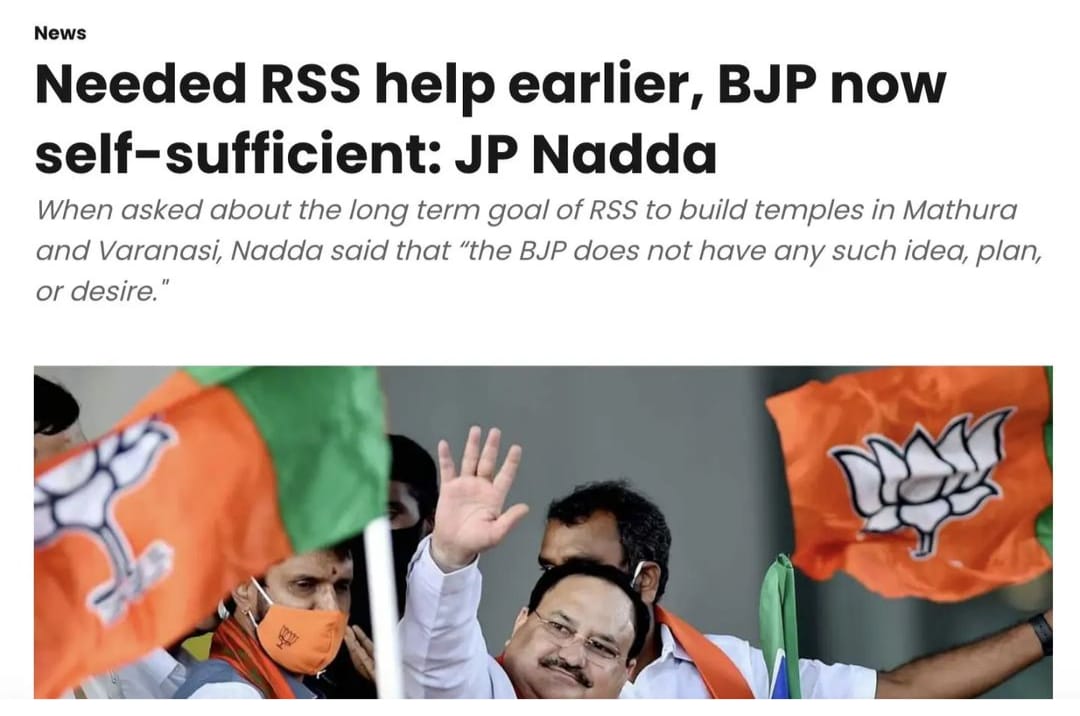
Further the undercurrent affected the result is the BJP’s occasional distancing from the RSS (Nadda’s statement on RSS) during strong electoral phases has also to be noted, suggesting a need for closer alignment between the two.
The DMK’s sweeping victory in Tamil Nadu is attributed more to the split of anti-DMK votes among the BJP, ADMK, and NTK and it is not a based on DMK’s performance on its won. DMK cherish the split votes due to big parties and lack of coalition between parties like ADMK and BJP. BJP’s second-place finish in 12 seats indicates significant gains in a challenging state. These results could set the stage for BJP’s potential resurgence in 2026 assembly.
The complex political landscape in Maharashtra, the unexpected shifts in Uttar Pradesh, and the particular factors (women voters swing) affecting West Bengal underline the diverse and dynamic nature of this election. The BJP’s strategic focus on Andhra Pradesh, Bihar, Odisha, and Madhya Pradesh has helped avert a larger electoral setback, but the results present a mix of surprises and lessons for future strategies for Shah and company.
One big take away is that BJP should have left Shivsena, NCP, AAP alone. Breaking parties never goes well with average humble Indian. Which can be debated on otherwise saying it controlled further damage in Maha due to lack of Maratha leader in BJP.
Important takeaway, proportion of rural voters for BJP has reduced but the urban voter percentage has increased which shows polarized different needs and expectations among rural and urban regions.
Question is not about BJP coming to power. While the BJP remains in power, there will be a significant shift in momentum. Journalists may hedge their bets, corporations could fund the opposition generously, and institutions might assert their independence on either side of its choice and lobby.
For the Modi-Shah leadership style, this situation will be devastating with its consequences. And this is setback for Modi style of politics.
Nevertheless Modi is not the Atal Bihari Vajpayee of 2004.

 Navaneeth Joshi