Quick pointers on Loksabha results 2024

Rajasthan’s poor performance in the loksabha election is notable, especially given that it has a Brahmin Chief Minister from a humble background. The political missteps (might be deliberate) by Vasundhara Raje appear to have significantly impacted the state’s electoral outcome. The cadre mobility and old gaurds behaviour post Rajashthan election in last december was upset as they expected Vasundhara to get the throne.

In Maharashtra, Sharad Pawar has demonstrated his political prowess by winning 7 out of 10 seats, asserting his dominance over Uddhav Thackeray, who secured only 9 out of 21 seats. This result underscores the influence of caste dynamics and the shifting allegiances away from the BJP, partly due to the collapse of smaller parties in Maha and overreliance on Modi’s leadership in state. The expectations of minority consolidation towards UBT was seen to certain extent.

Despite accusations of caste politics, Bihar supported the BJP even in the face of inadequate attention and leadership. This contrasts sharply with Uttar Pradesh, which has seen a significant shift. In Maha Muslims have shown a willingness to vote for Thackeray’s party, a stark change from 2019 when the INC captured 50% of the Muslim vote. This time consolidation for INC has increased by over +24% making it 74%, reflecting a strong opposition to the BJP amid lower voter turnout in the Hindi heartland due to lack of cadre and heatwave.

The opposition has made substantial gains in rural and Scheduled Caste reserved constituencies, highlighting rural distress and the consolidation of Dalit votes. The Dalits esp. SCs have this behaviour of moving away from those when they sense communal/caste politics as they get scared of there representation be it INC or BJP or any other regional party. This trend is evident in Haryana along with Jat rebellion against BJP, often seen as a bellwether state, and parallels are seen in several other states.

The next five years are likely to be defined by competitive welfare measures from both the BJP and Congress, with capital expenditure (infra) and other priorities potentially taking a backseat. The BJP’s complacency on its turf has resulted in a humbling experience, despite likely forming the government.

Election results invariably reflect the electorate’s perception of performance. Groups that feel neglected or seek alternative paths have delivered a clear verdict and not on governance/performance. Despite substantial investments by the BJP central government in UP’s development, this strategy appears to have come at the expense of south states.

Classic example of how community drives politics, In a polling booth of a village in Rampur Uttar Pradesh where 100% voters are Muslim, total 2322 votes were casted. 532 house were given under PM Awas Yojana in this village. BJP got 0 votes from these polling booths. Similarly, in Ayodhya with backward caste consolidation with Yadav votes, the creation of jobs through infrastructure and Hindu tourism initiatives has not translated into electoral success for the BJP, which trails despite these efforts.
The distinction between the BJP winning 240 versus 260 seats is crucial, with current numbers settled towards the lower end.

Senior leaders like Nitish Kumar and Chandrababu Naidu, with their substantial egos and seniority from the Vajpayee era, pose challenges for the BJP and its allies for reforms in future.

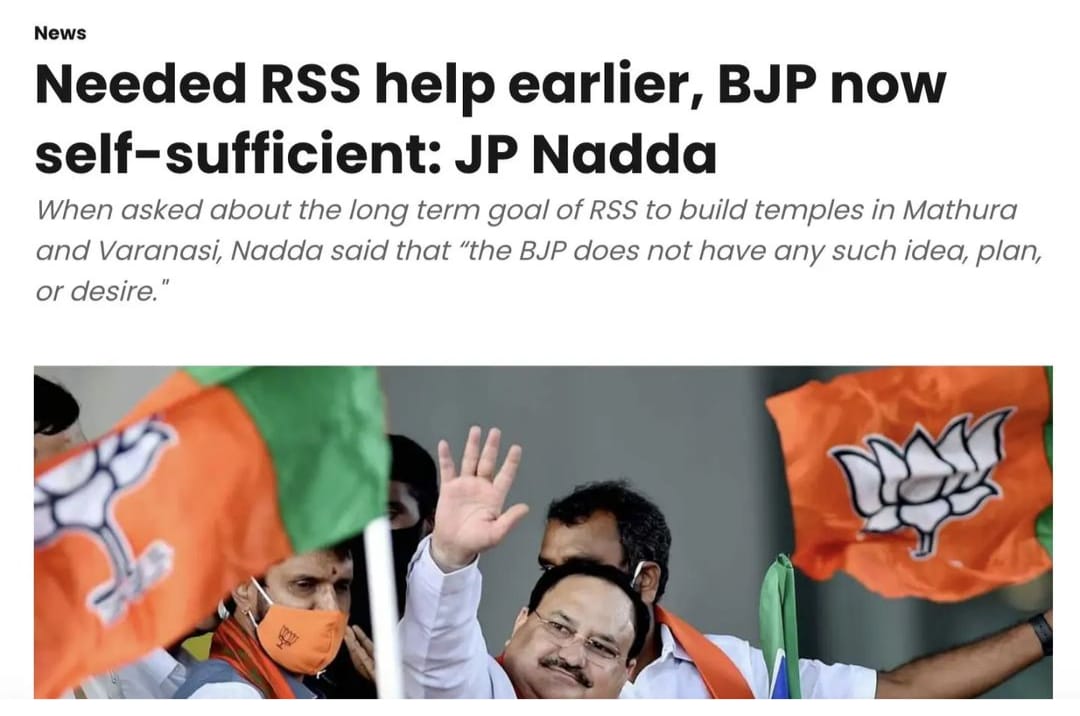
Further the undercurrent affected the result is the BJP’s occasional distancing from the RSS (Nadda’s statement on RSS) during strong electoral phases has also to be noted, suggesting a need for closer alignment between the two.

The DMK’s sweeping victory in Tamil Nadu is attributed more to the split of anti-DMK votes among the BJP, ADMK, and NTK and it is not a based on DMK’s performance on its won. DMK cherish the split votes due to big parties and lack of coalition between parties like ADMK and BJP. BJP’s second-place finish in 12 seats indicates significant gains in a challenging state. These results could set the stage for BJP’s potential resurgence in 2026 assembly.

The complex political landscape in Maharashtra, the unexpected shifts in Uttar Pradesh, and the particular factors (women voters swing) affecting West Bengal underline the diverse and dynamic nature of this election. The BJP’s strategic focus on Andhra Pradesh, Bihar, Odisha, and Madhya Pradesh has helped avert a larger electoral setback, but the results present a mix of surprises and lessons for future strategies for Shah and company.

One big take away is that BJP should have left Shivsena, NCP, AAP alone. Breaking parties never goes well with average humble Indian. Which can be debated on otherwise saying it controlled further damage in Maha due to lack of Maratha leader in BJP.

Important takeaway, proportion of rural voters for BJP has reduced but the urban voter percentage has increased which shows polarized different needs and expectations among rural and urban regions.

Question is not about BJP coming to power. While the BJP remains in power, there will be a significant shift in momentum. Journalists may hedge their bets, corporations could fund the opposition generously, and institutions might assert their independence on either side of its choice and lobby.

For the Modi-Shah leadership style, this situation will be devastating with its consequences. And this is setback for Modi style of politics.

Nevertheless Modi is not the Atal Bihari Vajpayee of 2004.
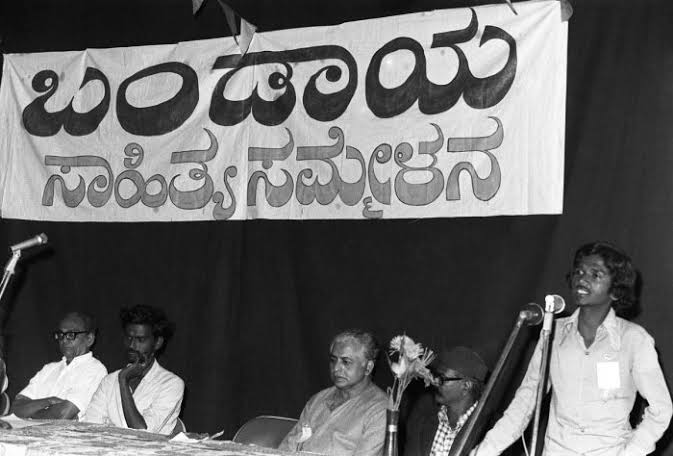
“Uncovering the Controversy: How SL Bhyrappa’s Novels Stirred the Literary Scene in Karnataka”

In 2007, SL Bhyrappa’s novel Avarana was published in Kannada, immediately creating a huge wave and becoming a significant turning point in Kannada literature. While it was never expected to have a national impact, it did over many years, much later. To understand the impact of Avarana, we need to step into the literary history of Karnataka.

From 1880-1960, the literary movement in Karnataka was Navodaya, which was culturally rooted. The next literary movement was Navya, which lasted from 1960-1980 and was modern with Western influence. The literary movement from 1970-2000 was Left Wing, Bandaya & Dalit, which was both literary and political, known as the Rebellion. Navodaya never died and continued to flow like River Saraswati, with its impact on society being the greatest. However, it simply did not have as many stalwarts as it did in the 1880-1960 period. SL Bhyrappa cannot be considered as Navodaya, but he took on their legacy in a different direction.

The Navya period brought many talented writers who were mostly looking at the West for influence in expression and culture, seeking to blend that into Tradition/History, even reinterpreting it, and moving towards Lohia+Secularism. Even they could not abandon Navodaya. Girish Karnad and UR Anantmurthy emerged in this scenario. Karnad’s first play “Maa Nishaada” came in 1958, Yayati in 1961 and Tughlaq in 1964. UR Anantamurthy began writing short stories in the late 50s, and his world-famous “Samskara” came in 1965. SL Bhyrappa began to write at the same time. From 1970 onwards, another significant writer emerged, P Lankesh, father of Gowri Lankesh. A great writer and successful journalist, he was a mix of Navya, Left, Bandaya, Lohia, and Secularism. He borrowed least from Navodaya but did not disrespect it and sought to appropriate it into his view.

Even in this period, the books that sold more on the ground were all a continuation of the Navodaya Tradition. SL Bhyrappa and Poornachandra Tejaswi(Son of Kuvempu), the latter in spite of his non-Navodaya character politically, wrote in the absolutely Navodaya tradition in his works. However, institutional power began to move towards the Left and Secularism all over the country, thanks to Indira Gandhi. The 70s was a period of enormous creativity that catapulted them into immense institutional power in the 80s and 90s. In this midst, SL Bhyrappa stood on the contrary.

As the cultural battle continued, the Left and secular forces continued to dominate the institutions, including the media and academia. They were able to influence the narrative and shape the discourse in their favor.

But despite their efforts, SL Bhayrappa’s novels continued to sell well and gain popularity among the people. His writings challenged the dominant narrative and offered a different perspective on Indian history and culture. One of his most controversial novels, Avarana, was published in 2007 and caused a great stir in the literary world. It exposed the distortion of Indian history and the manipulation of the narrative by the Left and secular forces. Despite the popularity of his writings, SL Bhyrappa faced constant criticism and ridicule from his opponents. P Lankesh was really at the forefront of this. A greatly talented man, as a journalist he could be such a terror. He trolled and humiliated people that he did not agree with and nobody could do anything. Net summary is that they managed to subdue the Navodaya continuation.

The stalwart among writers who withstood this cultural assault was SL Bhyrappa. There were others but he was the greatest. He not only continued to write on the contrary, all of them sold well and translated.

The cultural battle that started in the 80s and 90s continues to this day, with different forces vying for control of the narrative and the discourse. The Left and secular forces still dominate the institutions, but the society is no longer willing to be passive observers. People are beginning to question the dominant narrative and seek alternative voices and perspectives. The emergence of social media and alternative media outlets has also provided a platform for different voices and challenged the monopoly of the mainstream media. The cultural battle that started in the 80s and 90s has had a profound impact on the Indian society and its cultural and intellectual landscape. It has exposed the fault lines and divisions in the society and highlighted the need for a more open and inclusive discourse that allows for different voices and perspectives.

The literary scene in Karnataka during the 90s was marked by a special conflict or competition between two prominent writers, U.R. Ananthamurthy and S.L. Bhyrappa. This was fueled by constant comparisons between their works, particularly UR Anantamurthy’s “Samskara” and Bhyrappa’s “Vamsha Vriksha”. However, it was Girish Karnad who later joined the fray, shaping and acting in “Samskara” and directing adaptations of both “Vamsha Vriksha” and another SLB novel, “Tabbaliyu Neenade Magane”.

The competition between UR Anantmurthy and Bhyrappa reached new heights when UR Anantmurthy was honored with the Jnanapeetha Award in 1994, followed by Karnad in 1998. This led to a sense of superiority among the writers, with Karnad continuing to produce controversial works like “Dreams of Tipu Sultan” and “Agni Mattu Male (Fire and Rain)”, which manipulated history and tradition. He followed these up with “The Battle of Rakkasatangadi”, another controversial work which is a epic of downfall of Vijayanagara empire an battle between Aliya Ramarajya and Bahamanis.

Meanwhile, UR Anantmurthy continued to anchor cultural secularism and shifted towards left secularism post-2004. Bhyrappa, on the other hand, wrote three outstanding novels during this time: “Saartha” (1998), “Mandra” (2001), and “Avarana” (2007). “Saartha” set the stage for a battle as it painted a picture of the past that was completely against the Lohia Secularism Left Modern penchant, showcasing the problems of Buddhists and unabashedly painting the Turk assault while positioning Adi Shankaracharya differently. While others could not criticise Saartha much – for it was absolutely brilliantly written (better than Avarana while citing primary sources with it). But P Lankesh was made of different material. He ran a vitriol against Bhyrappa for weeks together. Can be found in the pages of Lankesh Patrike in 1998-99. 

Interestingly, In 2006, BJP came to power in Karnataka, DH Shankaramurthy made a statement that “Tipu was anti-Kannada,” which sparked a debate on the real face of Tipu Sultan. This debate continued for two months in various magazines and newspapers. The criticising segment was obviously aggressive, while those who supported Shankaramurthy wrote cautiously.

This debate was a turning point in Indian literature and society. SD Sharma’s Hindi book on Tipu Sultan was already translated into Kannada, and certain aspects of Tipu, not known in the 80s, had emerged. SL Bhyrappa, a renowned Kannada novelist, wrote a long piece presenting Tipu’s real face, based on SD Sharma’s book and other references. He criticised Girish Karnad’s play on Tipu Sultan, which was published in two full centre pages over two days.

Girish Karnad, known for his suave and sophisticated image, lost his mind completely and responded with personal, abusive, crying, and shouting comments. This made it very clear that Karnad, Chandrashekhar Kambhar, and others were all hollow inside in terms of substance and were only brilliant in their literary talent. Criticism from the tradition that was cautious until then became bold after this.

Avarana, Bhyrappa’s novel, was the final turning point. When Avarana was released, Kambhar had just released his novel and was getting criticised for multiple things. Avarana was just a massive tsunami from day one, and the left liberal Lohia Secularism segment was in shock. Bhyrappa had for the first time shifted the lens on the Abrahamic present and its problems and showed it as a continuation of the Abrahamic past.

UR Anantmurthy chose to lead from the front and criticised SL Bhyrappa in a speech as a mere debater and so on. Most newspapers were still with the left, but Vijaya Karnataka had emerged under Vishweshwar Bhat, who made a fantastic innovation. He invited SMS responses to UR Anantmurthy’s speech and published them without editing in the centre page. People poured their anger on UR Anantamurthy in ways that he never recovered from.

Avarana broke a psychological barrier and demonstrated that one could be confidently truthful about civilizational narratives, especially the conflict with the Abrahamic past and present. After this, in the mainstream, people began to very confidently write about all aspects of history and culture. The success of Avarana demonstrated that one could write from the tradition’s side with confidence, and many more people began to do so.

The novel was an absolute “raNa” in Kannada, intense, and a significant artistic achievement as it could pack a present and complex history into an artistic complex full of literary metaphors. It played a crucial role as it was both artistic and activistic. While there were others like Baragur Ramachandrappa who would continue many things of the Navya Left Lohia dimensions, the voice lost its intensity and the teeth its sharpness.

Overall, SL Bhyrappa’s Avarana had a significant impact on Indian literature and society, breaking a psychological barrier and encouraging people to confidently write about all aspects of history and culture.

(I have attempted to express, grab and knot my understanding of what I have heard, seen, and read, with most of the information coming from sources like Twitter, newspaper articles, and lectures. While these are not my own opinions, I appreciate the connections being made and I find myself in agreement with them.)

Seen and the Unseen effect

It’s all about observing the seen as well as unseen. It’s all about calculating the opportunity costs, which are the benefits that would have been gained if a different alternative had been taken. When analysing any economic policy, economists must evaluate not only the short-run effects on specific interest groups but also the long-run implications on all groups that the policy affects. Focusing on opportunity cost, Henry Hazlitt mentions on broken window fallacy. According to the broken window fallacy, it is a mistake to believe that spending money to repair damage signals an improvement in economic output and welfare. If money is spent to fix a broken window, that money cannot be used to purchase more productive things. Frédéric Bastiat considers the ‘unseen’ effects too. If the shop owner spends 50 dollars repairing a window, he cannot spend those 50 dollars on a new suit or new equipment. Therefore, while a glazier benefits, the tailor loses out. They forgot the tailor precisely because he will not now enter the transaction. They will see the new window in the next day or two. They will never see the extra suit, precisely because it will never be made. They see only what is immediately noticeable.

Then he hoists the black window fallacy on a larger scale. It is known as the blessing of destruction. Which is merely our old friend, in new clothing, and grown fat beyond recognition. This time it is supported by a whole bundle of related fallacies. It confuses need with demand. This theory talks about the advantages created by war by its destruction. It is true, that offsetting factors, technological discoveries and advances during the war, for example, may increase individual or national productivity at this point or that. But in short, it will change the postwar direction of effort; it will change the balance of industries; it will change the structure of an industry. This in time will also have its consequences. The belief of prosperity brought by replacement demand for the things destroyed is nonetheless a fallacy. Additional: World War II ended the great depression.

Further on he concedes to public works, but not merely the public goods alone, according to Hazlitt public works includes providing employment or adding wealth to the community. So, his first objection in the book is if the goal is to create jobs the utility of the project becomes irrelevant. So he questions policymakers about where a bridge can be built instead of where we need to build a bridge. These are the two questions he asks policymakers, one before building the bridge, second after building the bridge. Say, if a bridge is being built for one million dollars employing 500 people then the seen part of the transaction shows the employment for 500 people, but what is unseen is there is no employment creation at all. Those one million dollars will be borrowed from the taxpayers now or in future which they would have utilized for any other transaction for self-consumption. He says you just diverted the spending from one sector to another sector without any additional job creation.

When it comes to taxation, he thinks that a certain amount of revenue is indispensable in order to carry out critical government responsibilities. Reasonable taxes for this purpose are unlikely to have a significant impact on production. The type of government services provided in exchange, which include safeguarding manufacturing, more than compensate for this. However, if taxes take a higher share of national revenue, it will become a stronger impediment to private output and employment.

Foreign trade is a case where economists often fail to grasp the working process. We often see exports as something good for our economy, while imports are seen as bad. Imported things are things that workers can’t compete with, and so jobs are lost, it is often said. But as Hazlitt says: “It is exports that pay for imports. The greater exports we have, the greater imports we must have if we ever expect to get paid. The smaller imports we have, the smaller exports we can have. Without imports, we have no exports, for foreigners will have to have funds with which to buy our goods.” Those who seek import limits are also pushing for fewer exports, but they don’t say so, either because they don’t realise it or because it’s an unintended consequence. Additional: Why protectionism hurts?

In the end, the proposition stands that “And this is our lesson in its most generalized form. Many things that seem to be true when we concentrate on a single economic group are seen to be illusions when the interests of everyone, as a consumer no less than a producer, are considered. To see the problem as a whole, and not in fragments: that is the goal of economic science.”

Debunking Aryan Invasion Theories: An Indic Perspective

Since the beginning of Indology, the Aryan problem has engaged the attention of numerous scholars and though there was more or less unanimity among European philologists as to the nature of the language, its affinities with the major European language, the original home of the “Aryans” in Europe and “Aryan” culture and its date, brought out the inherent absurdities and self-contradictions in these theories. These absurdities can be disproved by using the new age of astronomical studies by finding the astronomical parallels contained in the Samhitas, also this will help in understanding the anxiety of European scientists from the 1800s and 1900s who tried to influence racial migration through colonialism.

The claim of Western Indologists on invasion theory begins with linguistic sources, where Schlegel‘s theory differentiates inflexional languages, including Sanskrit, by illustrating that it cannot be derived solely from animal sounds, and he also distinguishes it as a superficial language due to its complex structures. Based on this theory Whitney equates Sanskrit with other languages based on the stages of cultural development. He says the existence of Aryan languages in Mesolithic Europe, the most prominent of these ideas dates the Aryans’ origins to Southeastern Europe. Positional languages like Chinese, Burmese, and Sudanese symbolise the familial stage of civilization, agglutinative languages like Turkish, Swahili, and Korean the nomadic stage, and flexional languages the sophisticated political stage of Western Europeans. And concluded that the Vedic Sanskrit was thought to have been spoken by the ‘pastoral nomadic Aryans’.

But on the other hand, Prof. SS Sastri demonstrated both the above viewpoints as manifestly incompatible and concluded that language is not a relevant criterion in determining the cultural development of any society. He went on to say that conclusive proof is morphological in character and that any attempt at vocabulary comparison must be backed up by regular sound correlations. Dr. Srikanta Sastri went on elucidating the meaning of the Sanskrit word ‘arya’ by analysing its etymological meaning. Which explains the term “ri,” which means “to go” or “to migrate,” is also the source of the word Arya. As a result, the term “Aryan” was originally used to refer to “people of the land,” “workers of the land,” and hence agriculturalists. Over time, this term grew to connote talent, then nobleness, and, unfortunately, it was later assigned to a specific group of individuals with a racial connotation. He explained that the first component of the term ‘agricultural,’ ‘Agri,’ comes from the old Proto-Sanskrit root ‘ag-,’ which means “to go, to move, to act, to drag or pull as in pulling a plough, or drawing a waggon, or even ’tilling the soil by pulling a plough”.  The source of the name Arya is ‘Ag,’ from which the Sanskrit word ‘ajras’ (plain, open country, plot) is derived. The root of the words “area” and “acre” – cultivated land, ‘akker’ (Dutch), ‘Acker’ (German), ‘agros’ (Greek), ‘ager’ (Latin), and ‘cer’ (Old English) all imply “field” or “tract of land.” Linguistic similarities are not conclusive evidence of “Aryan invasion.” The Vedic Sanskrit language has the most vocables of any other Aryan language. Even though there has been inter-racial contact for millennia, these are preserved in Sanskritic languages in various parts of India. However, if the pre-Vedic Aryan language was spoken in various parts of Europe and Asia where the Aryans had settled before coming to India, how come only a few vocables are left in the present-day speech of those parts (as AIT suggests), while the majority of them are found in the far-flung places of ultimate settlement and racial admixture in India. On the contrary, this disparity can easily be explained if the pre-Vedic was the language of the homeland of Aryans and the other Aryan languages came into existence as a result of the contact between migrating Aryans and non-Aryan elements outside India and Persia. 

The earliest phase of Rigvedic culture is Neolithic as is evident from the use of stone, bone, and wood implements in the sacrifices (before 8,000 BCE). Aryans themselves regarded Sapta-Sindhu as their original home – devakrita-yoni or devanirmita-desa/Brahmavarta bound by Drashadvati and Sarasvati (Rigveda. 3.23.4). For centuries, migrating races have looked back to their homeland. After eight hundred years, the Parsis in India recall their origins. Even though they had lost their whereabouts, the ancient Egyptians and Phoenicians knew their respective homelands. If the Vedic Aryans arrived from outside, they must have lived in Sapta-Sindhu for so long before the Vedic period that they had lost all knowledge of their previous residence. Prof. Sastri conclusively claimed that the Indo-Hatti, Mittani, and other peoples are descendants of Indo-Aryans who migrated west as early as 3000 BCE (Because the Sarasvati River in the Brahmavarta region completely dried up.), if not earlier. Hereafter Vedic Gods in the Boghaz Koi inscription and Mitannian records were found from the Vedanga Jyotishya records of earlier aryans in the Sapta-Sindhu region(1,400 BCE).

The sacrificial rituals had long been established before the compilation of the samhitas. They represent fertility cults that cannot be attributed to any non-Aryan influence (Sastri 1941). We can deduce from his findings that the most common materials used for ritual vessels were wood, bone, and stone, with metal being used only infrequently. This emphasizes the Vedic period’s historicity. Prof. Wakankar’s (Wakankar 2008) research further supports the theory that the cave paintings at Bhimbetka are related to the Ashvamedha ritual (yaaga).

Aavarana: Uncovering Veil of Transgenerational Trauma

This book revolves around progressive couples who get into the mission of distorting history for scoring ideological points. Raziya and Amir, two professional filmmakers are touring Hampi to decide on a script for a documentary funded by the government. Amir being the director sets up his aim to harmonize the society amid communal clashes in the country. The story initially revolves around the paradoxical lifestyle of Marxist intellectuals and exposes phony views that they believe to be true in their utopian world. The initial context transparently showcases their selective hatred towards the Hindu religion and their perpetual struggle to corner the civilisational values of Hindus. Later on, Lakshmi (Raziya’s premarital name) gets stuck into the dilemma of forcefully following a particular religion in her husband’s home even after they both agree to live a progressive life.

Author SL Bhyrappa adequately elaborates the dilemma of Lakshmi and clearly demonstrates how the Marxist ideologies hasten the fall of gullible Hindu women into the trap of conversion. Also, this introductory story exemplifies the present situation of Kerala. After her Hampi tour, there arises a situation for Lakshmi which initiates her to fall in guiltiness; the death of her father Narsimhe Gowda who refused to accept her marriage and conversion with Amir. She visits her village for his last rites. She gets surprised after seeing a huge stack of books that her father had acquired during the 28 years after she had left her home. The self-made notes of her father on many intriguing topics build inquisitiveness in Lakshmi, after which she realises that the version of history sold by the Marxist nexus led by Prof Shastri and his comrades are filled with irreconcilable lies.

Unravelling of historical Negationism : The process of self-realisation and introspection begins, and then she encounters many barbaric acts of Muslim rulers in the past. This book is a great example to narrate the struggles of present-day millennials and their dilemma to explore the righteousness in this enclosed mass psychosis. Later on, Lakshmi finds out about the destruction of temples and barbaric genocides of Tipu and Aurungezb which was delicately wrapped by left intellectuals as a freedom fighter and as an icon of fortune. As Koenraad Elst pointed out in a YouTube video, “if India were a Muslim-majority nation, Babri Masjid would become the national monument showcasing the victory of one-true-religion over infidels. This was a systematic activity carried out by every pious Muslim king (with an exception of Akbar who earned the ire of traditionalists for this reason) and can be traced to the very origin of Islam in Arabia.”

Right in the middle of the story author takes us on a catastrophic and exasperating tour where he narrates a story of a Hindu king who sees his men getting butchered by Aurangzeb’s army, he hears the cries of their women committing Jauhar and sees his Kingdom’s chief deity Lord Vishnu’s idol being broken to pieces. The author here portrays the helplessness of the Hindu king, and how victoriously Muslim kings took the young women as their slaves.

To note down here, we need to understand that present-day Muslims in no way are responsible for what these barbarians did. As a matter of fact, many Indian Muslims were born Hindus who converted to Islam. They’re the primary victims of forceful conversion. Present-day Germans are not condemned for atrocities committed by Nazis, they disassociated from their past and condemned it and have moved on. Unfortunately, Indians got no chance to know about their authentic history which was frequently buried in distortion.

The beauty of this literary work is every detail and the behaviour of the characters described are backed by evidence without violating the boundaries of artistic freedom. The dilemma of Lakshmi and the cognitive dissonance of Amir are lucidly laid out by the author. This book is a whistle blower in exposing the systematic activity which is carried out by urban naxals to break India within. Also one can easily know the modus operandi of these intellectuals which actively deny, twistor re-frame the facts to fit their ideological template while ignoring facets that stand distinctly out from their narrative. The question with which author of this book leaves you is – can you disconnect yourself completely from your collective past? Communities with a tumultuous past, can they live without that past walking in? “We cannot truly comprehend our selves or the history of our nation or, indeed, the history of the entire world, unless we unshackle ourselves from the bonds of false knowledge, desire and action, and elevate the intellect to a state of detached observation.”

Also surprisingly Marx says, “The question of whether objective truth can be attributed to human thinking is not a question of theory but is a practical question.” – Marx, Theses On Feuerbach: Thesis 2 (1845)

Book review: The Story Of Islamic Imperialism In India by Sita Ram Goel

Sita Ram Goel in this book defines the history of the Islamic invasions of India and its role in contemporary Indian politics. This book also gives background to what he names dhimmitude (it is a neologism first found in French denoting an attitude of concession, surrender and appeasement towards Islamic demands) in India. At the outset of the book, the author mentions the thoughtlessness of the ruling class secularists and socialists in India suffering from ideological blindness. He says if they do so, that would become sacrilege and a serious slur on their reputation as progressive, liberal, and large hearted.

They are not supposed to see the violent waves of Islamic imperialism swelling all around them. He berated Indian secularism, alleging that “this concept of Secularism is a gross perversion of the notion which arose in the modem west as a revolt against Christianity and which should mean, in the Indian context, a revolt against Islam as well.

As compared to Islamic invaders Britishers and their missionary nexus were pretty much kinder to India and the Indians as described in relation to the medieval Islamic invaders. Unlike Muslims, they never demolished Hindu temples and converted Hindus by force and never attempted insult and injury on every Hindu sentiment and institution. We can even say the animosity of Christians towards Hindus was more organized and well structured whereas Muslims spewed direct and intolerant hatred on Hinduism like mullahs and Sufis poured ridicule and contempt on Hindu religion and culture without any compunction.

To amplify insult to injury, the National Curriculum Authority had issued edicts to present Islamic and European colonialism in a glowing favorable light. The result was that in 50 years generations had grown up with no knowledge of their rich heritage. Goel called it “an insidious attempt at thought-control and brainwashing” and argued that National Curriculum Authority guidelines are an “experiment with untruth” and an exercise of suppressio veri suggestio falsi. He asserted that the NCERT guidelines are recommendations for telling lies to our children, or for not telling to them the truth at all.” This book goes some way towards helping understand a small but significant segment of history that was stifled. The best part of the book is author submitted the work without any kind of self-imposed censorship. This makes it difficult to swallow the factual discourse for leftist intellectuals.

Hindu view of the conflict and Muslim view of the conflict is described very lucidly in this book, he gave two different dimensions to look after the objectives of respective sides which clear out that, the rise of Vijayanagara, the Marathas, and the Sikhs, the religious motive here is brought into a sharper focus. The goal for which the sword of Hindus was unsheathed by Harihar and Bukka, Shivaji and the Sikhs, comes to be quite clear in many poems written in praise of these heroes by several Hindu poets. The objective was to save the cow, the Brahmin, the ikha, the sutra, the honour of Hindu women, and the sanctity of Hindu temples.

On the succeeding dimension, many Muslim historians of medieval India have left for posterity some very detailed, many a time day-to-day, accounts of what happened during the endless encounters between Hindus and Muslims. The prominent theme in these accounts is of mu’mins (Muslims) martyred; of kafirs (Hindus infidels/non-believers) dispatched to hell; of cities and citadels were sacked; tons of genocide taken place; of Brahmins killed or forced to eat beef; of temples smashed to the ground and mosques raised on their sites. But the unfortunate and deliberate distortion of history by progressives stands on the viewpoint that, no exaggeration of this kind of religious and political conflicts should be permitted in NCERT textbooks. Even though the guidelines are aware of these barbaric destructions by Islamic invaders they still warn that ‘there should be no over-glorification of the medieval rule’ and further prohibited that the writer should not under-emphasized condemnation of bigotry, intolerance and exclusiveness.

Even though Goel was hard on medieval invaders he also believed that the “average Muslim is as good or bad a human being as an average Hindu” and warned:

“Some people are prone to confuse Islam with its victims, that is, the Muslims, and condemn the latter at the same time as they come to know the crudities of the former. This is a very serious confusion, which should be avoided by all those who believe in building up a broad-based human brotherhood as opposed to narrow, sectarian, self centred, and chauvinistic nationalism or communalism.”

Sita Ram Goel is one of the underrated intellectuals who got suppressed by eminent historians for his uncensored brutal and factual attack on pseudo-seculars. Also to note, when Goel applied for a passport in the year 1955, it was directly declined by the PM office. Goel was staunch Marxist initially but after his critical comments on Nehruvian nexus he was subjected to all sorts of malignance and he was accused falsely by ad-hominem attacks. Later on, he turned into an anti-communist.

This book stands out as a shred of perfect evidence to know the perpetual distortion of history by eminent historians, and also an eye-opening work to understand the organized modus operandi of Marxist intellectuals in open academia.

Investigating the Legal Competency of Anti-Conversion laws

In prevailing years, more and more states in India have passed laws to restrict religious conversion, specifically targeting conversions via “force” or “allurement.” Current laws stem back to innumerable colonial laws (containing anti-conversion, apostasy, and public-safety acts) in British India and several other princely states. Implementing such regulations appears to require judging the state of mind of the converts by scrutinizing their motives and volition or, in other words, distinguishing whether converts were “lured” or legitimate. In modern India, administration assessments of the legitimacy of conversions manage to count on two assumptions: first, that people who convert in denominations may not have voluntarily decided on conversion, and second, those unique communities are especially vulnerable to being lured into shifting their religion. These hypotheses, which extend throughout the anti-conversion laws as well as appropriate court decisions and government committee reports, reinforce social constructions of women and lower castes as inherently naïve and susceptible to manipulation. Like “protective” laws in many other contexts, such laws restrict freedom in highly personal and private, individual preferences and thus must be carefully scrutinized.

The Report of the Christian Missionary Activities Enquiry Committee of 1956 sheds light on more concerns about conversion, which comprised public order, social cohesion, and national security in the contemporary nation. Committee chairman Dr M.B. Niyogi submitted this report, primarily a scathing review of missionary activity, with a letter stating that the members of the

  • The committee was guided solely by the necessity to maintain intact the solidarity and security of the country, to prevent disruption of society and culture, and to emphasize the essential secular character of the Constitution. If they have drawn attention to certain disruptive tendencies inherent in, or incidental to, the exercise of certain liberties in matters of religion, they have done so not intending to curtail individual rights and freedom, but to the exercise thereof in a manner consistent with public order, morality and health.

This report constituted recommendations to restrict conversions; in fact, the committee recommended restricting “any attempt or effort (whether successful or not), directly or indirectly, to penetrate the religious conscience of persons of another faith.” The report comprised papers of summarized testimony before the committee, including lists such as, “The following persons reported that they were converted by giving or getting loans for a plough.” Skepticism of conversions and beliefs about the gullibility of poor converts, voiced in this report, paved the path for legal restrictions.

On 9th April 2021, the Supreme Court bench held that persons above 18 years of age are free to choose religion as it rejected a plea seeking directions to the Centre and states to curb black magic and religious conversion. The bench said there is no rationale why a person above 18 years can’t be allowed to choose his religion. Court also told senior advocate Gopal Sankaranarayana, to reconsider appearing for petitioner advocate Ashwini Upadhyay. Upadhyay, a Delhi leader and an advocate then sought liberty to withdraw the petition and permission to make representation to the government and the law commission. The bench also refused to grant permission and dismissed the petition as withdrawn. Upadhyay had sought directions to the Centre and states to ban black magic, superstition and fraudulent and forcible religious conversions. His PIL wanted the top court to ask the government to appoint a committee to ascertain the feasibility of legislating anti-conversion law to check the misuse of religious conversion. Upadhyay in his PIL also pointed out the judgement that the Supreme Court had in the Sarla Mudgal Case (1995) instructed the Centre to convince the feasibility of enacting an anti-conversion law.

The Supreme Court in landmark judgements of Lily Thomas V. Union of India 2000 (6) SCC 224 and Sarla Mudgal v. Union of India 1995 (3) SCC 63, has substantiated that religious conversions performed without a bona fide belief and for the sole objective of deriving some legal benefit are illegal and do not hold grounds. These trials were primarily concerned with the religious conversions by Hindu men to Islam to conclude bigamous marriages. That people formulate tactical shifts in their personal beliefs to conform to their self-interest is not new. Such examples do, however, raise an interesting legal issue: When the freedom to profess and propagate religion is constitutionally mandated, how is India competent to give rise to laws that prevent religious conversion, whatever can be the incentive to do the same? Before this particular petition, Orissa was the prominent state to pass a law that prohibited religious conversion “by the use of force or inducement or by fraudulent means”The Orissa Freedom of Religion Act, 1967. The act was enacted in 1967 which states that no person shall convert or attempt to convert either directly or otherwise any individual from one religious faith to another by the use of fraud, force, allurement or inducement and nor shall any person should be the victim of the abetment of any such conversion. The contravention of this law would amount to retribution with imprisonment of up to one year or a fine of up to Rs. 5,000 to Rs. 10,000 with two years of imprisonment in case of a minor belonging to SC/ST or is a woman. The Orissa High Court, however in the year 1967, abrogated the Act as unconstitutional on the basis that the state legislature did not have the right to legislate on courses of any religion.

Recently, a similar ordinance was brought down by the Uttar Pradesh High Court called Prohibition of Unlawful Conversion of Religion Ordinance, 2020, which was passed by the UP Government on 28 November 2020 which is a much-debated law in recent legal diaspora and is being treated as a law against Love Jihad. This Ordinance provides punishment up to 10 years for violation of its provisions along with other sanctions. It targeted religious conversion under two circumstances. The first being the situations of conversion through fraud, misrepresentation or coercion largely unproblematic. While the second circumstance is about the conversion ‘done for the sole purpose of marriage’. Section 6 of this Ordinance declares that the marriages done for the sole purpose of unlawful conversion or vice versa shall be declared void. This brimmed with controversy. Hence, the said petition and the state ordinances of anti-conversion entirely for marriage to evade the impact of the Special Marriage Act provides a discernible legal benefit which was arguably struck down by the declarations in Lily Thomas and Sarla Mudgal.

 Moreover, the Supreme Court, in Stanislaus’ case has already held that the act of religious proselytization is not conserved by Article 25 of the Constitution. Also in the Arun Ghosh vs. State of West Bengal verdict of 1950, SC held that an attempt to raise communal passions through forcible conversions would be a violation of public order and impact on the community as a whole. Thus, it was held that the States were authorized under Entry 1 of List II of the Seventh Schedule of the Constitution to enact local Freedom of Religion laws to exercise their civil powers and restore public order in the similar context mentioned above in the Stanislaus’ case.

Thus, it’s difficult to assert that the UP legislation is unconstitutional for curtailing religious conversions performed purely for marriage. It is moreover affirmed by the continued and unchallenged validity of identical legislation in states such as Uttarakhand and Himachal Pradesh.

These laws interpreted force to include “threat of divine pleasure”. The complicated aspect in these acts (which Jennie Louise refers to as ‘evaluative conflict’ in her paper Ethical Theory and Moral Practice) was the probability that a right motive might direct an agent to execute a wrong act. Identical Acts and Ordinances aiming to resist this phenomenon(which is the right motive, with the wrong action) must argue that causal relationship implicates motives and acts having the same ethical status.

So if we examine the concept of religious liberty in the backdrop of conversion we find that the right to change faith is inherent in the right to freedom of conscience guaranteed under Article 25 of the Indian Constitution. The right to change religion encompasses within its fold the right to prefer a religion. Though there are few religions in which propagation as a means to convert others is central to a particular religion, that does not indicate that this right is absolute. Restrictions can still be laid down in governing such right of conversion as per the freedom of religion enshrined under Article 25(1), the weakest constitutional guarantee.

Sabotaging the national security amid crisis – Bringing Jihad on trial

  • Penetrating the historical footprints of orthodox Islamic movements, since 1927 till today’s Manchurian virus outbreak.

This movement grabs the attention among the majority moderate Muslim population in South Asia. They are religious zealots who aims to bring back the Islamic unity as it was during the period of Muhammad. They do conventions to target moderate population. The Tablighi Jamaat movement was established in Mewar, India, in 1927 which roots from the Deobandi brand of the Hanafi Sunni school of jurisprudence. Deobandi is the most commonly practiced form of Islam in South Asia.

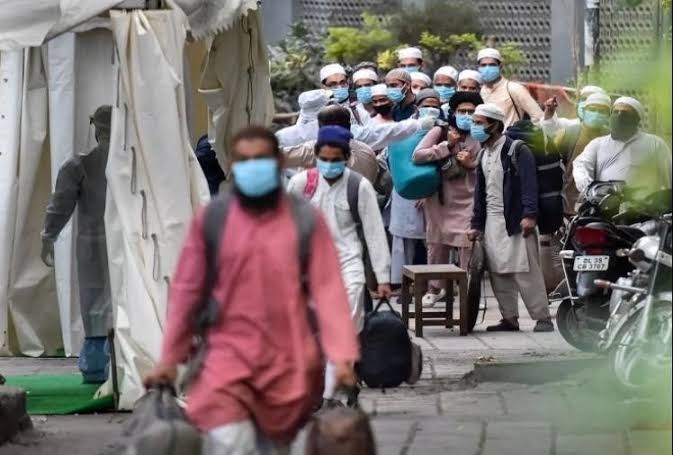
Tablighi Jamaat followers outside the Bangle Wali Masjid in Delhi Source: Mint

Spanish police conducted a series of raids on apartment buildings, a mosque and a prayer hall in Barcelona on Jan. 19 of 2008 and reported that detainees were Islamists belonging to a “well-organized group named Tablighi Jamaat that had gone a step beyond radicalization.”

Tablighi Jamaat also has its link with Kashmiri sepratists, Taliban and al Queda. It was also suspected for involving in infamous hijacking of Indian Airlines Flight 814 in 1999 and 2002 Godhra roits. Wikileaks 2011 files reveals that al Queda used Jamaat to get visas and fund terrorist to travel Pakistan. Saudi Arabian named Abdul Bukhary, as “a veteran jihadist”, the report submitted by US authorities in-charge of Guantanamo Bay in Cuba, said a Jamaat member, whom he met in 1985-1986 helped to obtain his visa to travel Pakistan. Iyman Faris, accused by captured for plot to destroy Brooklyn bridge in 2003 was helped by the same jamaat to travel Pakistan.

 ”We have a significant presence of Tablighi Jamaat in the United States, and we have found that Al Qaeda used them for recruiting, now and in the past,” Michael J. Heimbach, the then deputy chief of the F.B.I.’s international terrorism section, is quoted as saying in an NYT report from 2003.

Futher detainees captured in New Delhi, Somalia were helped by these Jamaats to get funds for plotting and visas to fly.

Footnotes : Stratfor Global Intelligence