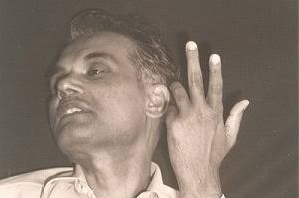
Aavarana: Uncovering Veil of Transgenerational Trauma

This book revolves around progressive couples who get into the mission of distorting history for scoring ideological points. Raziya and Amir, two professional filmmakers are touring Hampi to decide on a script for a documentary funded by the government. Amir being the director sets up his aim to harmonize the society amid communal clashes in the country. The story initially revolves around the paradoxical lifestyle of Marxist intellectuals and exposes phony views that they believe to be true in their utopian world. The initial context transparently showcases their selective hatred towards the Hindu religion and their perpetual struggle to corner the civilisational values of Hindus. Later on, Lakshmi (Raziya’s premarital name) gets stuck into the dilemma of forcefully following a particular religion in her husband’s home even after they both agree to live a progressive life.

Author SL Bhyrappa adequately elaborates the dilemma of Lakshmi and clearly demonstrates how the Marxist ideologies hasten the fall of gullible Hindu women into the trap of conversion. Also, this introductory story exemplifies the present situation of Kerala. After her Hampi tour, there arises a situation for Lakshmi which initiates her to fall in guiltiness; the death of her father Narsimhe Gowda who refused to accept her marriage and conversion with Amir. She visits her village for his last rites. She gets surprised after seeing a huge stack of books that her father had acquired during the 28 years after she had left her home. The self-made notes of her father on many intriguing topics build inquisitiveness in Lakshmi, after which she realises that the version of history sold by the Marxist nexus led by Prof Shastri and his comrades are filled with irreconcilable lies.

Unravelling of historical Negationism : The process of self-realisation and introspection begins, and then she encounters many barbaric acts of Muslim rulers in the past. This book is a great example to narrate the struggles of present-day millennials and their dilemma to explore the righteousness in this enclosed mass psychosis. Later on, Lakshmi finds out about the destruction of temples and barbaric genocides of Tipu and Aurungezb which was delicately wrapped by left intellectuals as a freedom fighter and as an icon of fortune. As Koenraad Elst pointed out in a YouTube video, “if India were a Muslim-majority nation, Babri Masjid would become the national monument showcasing the victory of one-true-religion over infidels. This was a systematic activity carried out by every pious Muslim king (with an exception of Akbar who earned the ire of traditionalists for this reason) and can be traced to the very origin of Islam in Arabia.”

Right in the middle of the story author takes us on a catastrophic and exasperating tour where he narrates a story of a Hindu king who sees his men getting butchered by Aurangzeb’s army, he hears the cries of their women committing Jauhar and sees his Kingdom’s chief deity Lord Vishnu’s idol being broken to pieces. The author here portrays the helplessness of the Hindu king, and how victoriously Muslim kings took the young women as their slaves.

To note down here, we need to understand that present-day Muslims in no way are responsible for what these barbarians did. As a matter of fact, many Indian Muslims were born Hindus who converted to Islam. They’re the primary victims of forceful conversion. Present-day Germans are not condemned for atrocities committed by Nazis, they disassociated from their past and condemned it and have moved on. Unfortunately, Indians got no chance to know about their authentic history which was frequently buried in distortion.

The beauty of this literary work is every detail and the behaviour of the characters described are backed by evidence without violating the boundaries of artistic freedom. The dilemma of Lakshmi and the cognitive dissonance of Amir are lucidly laid out by the author. This book is a whistle blower in exposing the systematic activity which is carried out by urban naxals to break India within. Also one can easily know the modus operandi of these intellectuals which actively deny, twistor re-frame the facts to fit their ideological template while ignoring facets that stand distinctly out from their narrative. The question with which author of this book leaves you is – can you disconnect yourself completely from your collective past? Communities with a tumultuous past, can they live without that past walking in? “We cannot truly comprehend our selves or the history of our nation or, indeed, the history of the entire world, unless we unshackle ourselves from the bonds of false knowledge, desire and action, and elevate the intellect to a state of detached observation.”

Also surprisingly Marx says, “The question of whether objective truth can be attributed to human thinking is not a question of theory but is a practical question.” – Marx, Theses On Feuerbach: Thesis 2 (1845)
Book review: The Story Of Islamic Imperialism In India by Sita Ram Goel

Sita Ram Goel in this book defines the history of the Islamic invasions of India and its role in contemporary Indian politics. This book also gives background to what he names dhimmitude (it is a neologism first found in French denoting an attitude of concession, surrender and appeasement towards Islamic demands) in India. At the outset of the book, the author mentions the thoughtlessness of the ruling class secularists and socialists in India suffering from ideological blindness. He says if they do so, that would become sacrilege and a serious slur on their reputation as progressive, liberal, and large hearted.

They are not supposed to see the violent waves of Islamic imperialism swelling all around them. He berated Indian secularism, alleging that “this concept of Secularism is a gross perversion of the notion which arose in the modem west as a revolt against Christianity and which should mean, in the Indian context, a revolt against Islam as well.

As compared to Islamic invaders Britishers and their missionary nexus were pretty much kinder to India and the Indians as described in relation to the medieval Islamic invaders. Unlike Muslims, they never demolished Hindu temples and converted Hindus by force and never attempted insult and injury on every Hindu sentiment and institution. We can even say the animosity of Christians towards Hindus was more organized and well structured whereas Muslims spewed direct and intolerant hatred on Hinduism like mullahs and Sufis poured ridicule and contempt on Hindu religion and culture without any compunction.

To amplify insult to injury, the National Curriculum Authority had issued edicts to present Islamic and European colonialism in a glowing favorable light. The result was that in 50 years generations had grown up with no knowledge of their rich heritage. Goel called it “an insidious attempt at thought-control and brainwashing” and argued that National Curriculum Authority guidelines are an “experiment with untruth” and an exercise of suppressio veri suggestio falsi. He asserted that the NCERT guidelines are recommendations for telling lies to our children, or for not telling to them the truth at all.” This book goes some way towards helping understand a small but significant segment of history that was stifled. The best part of the book is author submitted the work without any kind of self-imposed censorship. This makes it difficult to swallow the factual discourse for leftist intellectuals.

Hindu view of the conflict and Muslim view of the conflict is described very lucidly in this book, he gave two different dimensions to look after the objectives of respective sides which clear out that, the rise of Vijayanagara, the Marathas, and the Sikhs, the religious motive here is brought into a sharper focus. The goal for which the sword of Hindus was unsheathed by Harihar and Bukka, Shivaji and the Sikhs, comes to be quite clear in many poems written in praise of these heroes by several Hindu poets. The objective was to save the cow, the Brahmin, the ikha, the sutra, the honour of Hindu women, and the sanctity of Hindu temples.

On the succeeding dimension, many Muslim historians of medieval India have left for posterity some very detailed, many a time day-to-day, accounts of what happened during the endless encounters between Hindus and Muslims. The prominent theme in these accounts is of mu’mins (Muslims) martyred; of kafirs (Hindus infidels/non-believers) dispatched to hell; of cities and citadels were sacked; tons of genocide taken place; of Brahmins killed or forced to eat beef; of temples smashed to the ground and mosques raised on their sites. But the unfortunate and deliberate distortion of history by progressives stands on the viewpoint that, no exaggeration of this kind of religious and political conflicts should be permitted in NCERT textbooks. Even though the guidelines are aware of these barbaric destructions by Islamic invaders they still warn that ‘there should be no over-glorification of the medieval rule’ and further prohibited that the writer should not under-emphasized condemnation of bigotry, intolerance and exclusiveness.

Even though Goel was hard on medieval invaders he also believed that the “average Muslim is as good or bad a human being as an average Hindu” and warned:

“Some people are prone to confuse Islam with its victims, that is, the Muslims, and condemn the latter at the same time as they come to know the crudities of the former. This is a very serious confusion, which should be avoided by all those who believe in building up a broad-based human brotherhood as opposed to narrow, sectarian, self centred, and chauvinistic nationalism or communalism.”

Sita Ram Goel is one of the underrated intellectuals who got suppressed by eminent historians for his uncensored brutal and factual attack on pseudo-seculars. Also to note, when Goel applied for a passport in the year 1955, it was directly declined by the PM office. Goel was staunch Marxist initially but after his critical comments on Nehruvian nexus he was subjected to all sorts of malignance and he was accused falsely by ad-hominem attacks. Later on, he turned into an anti-communist.

This book stands out as a shred of perfect evidence to know the perpetual distortion of history by eminent historians, and also an eye-opening work to understand the organized modus operandi of Marxist intellectuals in open academia.